
Access Taylor County Court Records
Taylor County court records are maintained by the Superior Court Clerk in Butler, Georgia, the county seat. This page covers how to search Taylor County court records through Georgia's statewide online systems, how to request specific documents from the clerk's office in Butler, and what civil, criminal, and real estate records fall under public access in this rural middle Georgia county.
Taylor County Quick Facts
Taylor County Superior Court Clerk
The Superior Court Clerk in Butler is the elected official who keeps all Taylor County court records for the superior court. The clerk's office handles filings for felony criminal cases, civil suits, divorce and family law matters, real estate transactions, liens, and other documents under superior court jurisdiction. Georgia law requires the clerk to maintain these records and provide public access to most of them.
Taylor County is a small, rural county in middle Georgia. The courthouse in Butler handles a lower filing volume than urban counties, but the rules for access are the same. Visit during regular business hours Monday through Friday. Have the party name, case number if available, and approximate filing year ready before you arrive. The clerk also processes certified copy requests and can explain the current fee schedule.
Note that Butler, Georgia, is the county seat of Taylor County. It is a separate city from other towns named Butler in other states. Use the Find My Clerk directory from the Georgia Superior Court Clerks' Cooperative Authority to get the current phone number, address, and hours for the Taylor County clerk's office before making a trip or mailing a request.
Online Resources for Taylor County Court Records
The GSCCCA search portal is the main statewide tool for Georgia court and real estate records. The Georgia Superior Court Clerks' Cooperative Authority runs it and covers all 159 counties, including Taylor. A standard subscription is $14.95 per month; a premium plan costs $29.95 per month. Individual printed pages are $0.50 each. The portal covers real estate deeds, UCC filings, and case index data.
Case documents from 2005 forward are available through PeachCourt. You can search by party name or case number and download documents at $0.50 per page. PeachCourt is a practical starting point for most Taylor County records requests because it covers the bulk of recent filings. For older records, the clerk's office in Butler is the right resource.
The Georgia Judicial Gateway provides general information about the state court system and links to court resources by county. While it does not serve as a direct case lookup tool, it can help you identify which court in Taylor County has jurisdiction over a particular matter before you file or make a records request.
Types of Court Records in Taylor County
Superior court in Taylor County has jurisdiction over felony criminal cases, civil disputes above the magistrate threshold, divorce and domestic relations filings, real property matters, and equity cases. The clerk's office in Butler indexes and stores all of these. Most records are open to the public under O.C.G.A. § 50-18-70, Georgia's Open Records Act, which requires agencies to respond to records requests within three business days.
Magistrate court handles smaller civil claims, bad check cases, and local ordinance violations. These records are separate from superior court records and are maintained by the magistrate court. If you are looking for a small claims judgment or a county ordinance case, contact Taylor County Magistrate Court rather than the Superior Court Clerk.
Restricted records include sealed case files, juvenile court records, and documents containing certain protected identifiers. O.C.G.A. § 50-18-72 governs these exemptions. If access to a particular file is denied, ask the clerk which exemption applies and whether any portion of the document can be released without a court order.
E-Filing and Case Monitoring for Taylor County
Taylor County participates in Georgia's statewide e-filing system. Attorneys and eligible self-represented parties can submit documents to the Taylor County Superior Court through PeachCourt without traveling to Butler. This is a significant convenience for out-of-area litigants and law firms that handle cases in multiple rural counties. PeachCourt support is available at 844-GA-EFILE.
The GSCCCA's FANS alert system sends free email notifications when new filings are added to Taylor County cases you are watching. It requires no paid subscription and covers all 159 Georgia counties. The image below shows the GSCCCA search portal where you can begin a search for Taylor County real estate and court index records.
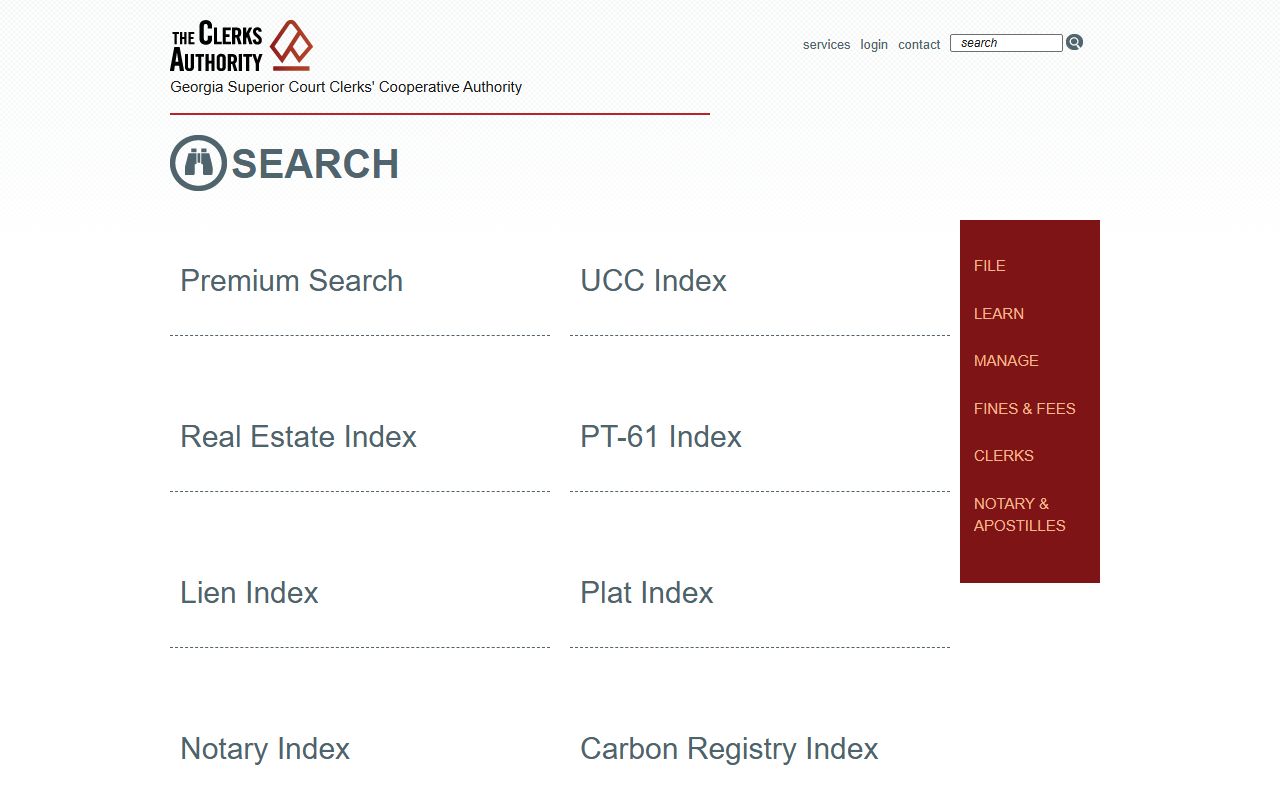
The GSCCCA portal pulls data from all county clerks statewide. Taylor County records are included in the index, so searches run on the portal reflect current filings submitted by the Butler clerk's office.
Requesting Taylor County Court Records by Mail
Mail requests go to the Superior Court Clerk's office in Butler, GA. Include the party name, approximate case year, case number if you have it, your return mailing address, and payment for applicable copy fees. Georgia law sets a per-page fee for certified copies; plain copies typically cost less. Call the office before mailing to confirm the current fee schedule so you send the correct amount.
Response times for mail requests depend on office workload. If your need is time-sensitive, PeachCourt or an in-person visit to the Butler courthouse are faster options for records from the past twenty years.
Cities in Taylor County
No cities in Taylor County exceed the population threshold for individual city pages. All Taylor County court records are filed and maintained at the Superior Court Clerk's office in Butler, the county seat.
Nearby Counties
These counties share a border with Taylor County. Each has its own Superior Court Clerk and independent court records.