
Search Georgia Court Records
Georgia court records are public documents kept by the Superior Court Clerk in each of the state's 159 counties. These files cover civil and criminal cases, real estate documents, UCC filings, and other official court documents. You can search Georgia court records online through the GSCCCA portal, look up cases by county through PeachCourt, or visit your local clerk office in person. Both online and in-person options are open to the public. This site helps you find the right tools and offices to look up court records anywhere in Georgia.
Georgia Court Records Quick Facts
Georgia Court System Overview
Georgia courts operate at several levels. At the top sits the Supreme Court of Georgia, which hears appeals on constitutional questions and certain case types. Below that is the Georgia Court of Appeals, the intermediate appellate court. Superior Courts are the main trial courts, one per county, handling major civil and criminal matters. State Courts, Magistrate Courts, Juvenile Courts, Probate Courts, and Municipal Courts round out the system. Each level keeps its own records, and access rules vary by court type. Most people searching for Georgia court records will start at the Superior Court level.
The Georgia Superior Court Clerks' Cooperative Authority, known as GSCCCA, is the central agency for statewide court record access. GSCCCA maintains an index of UCC filings across Georgia, real estate and personal property records, a database of notaries public, and a statewide database on civil case filings. Their main office is at 1875 Century Boulevard, Suite 100, Atlanta, GA 30345. You can reach their support line at (404) 327-9058 on weekdays from 7:30 a.m. to 6:00 p.m. The authority is the single best starting point for searching Georgia court records across county lines.
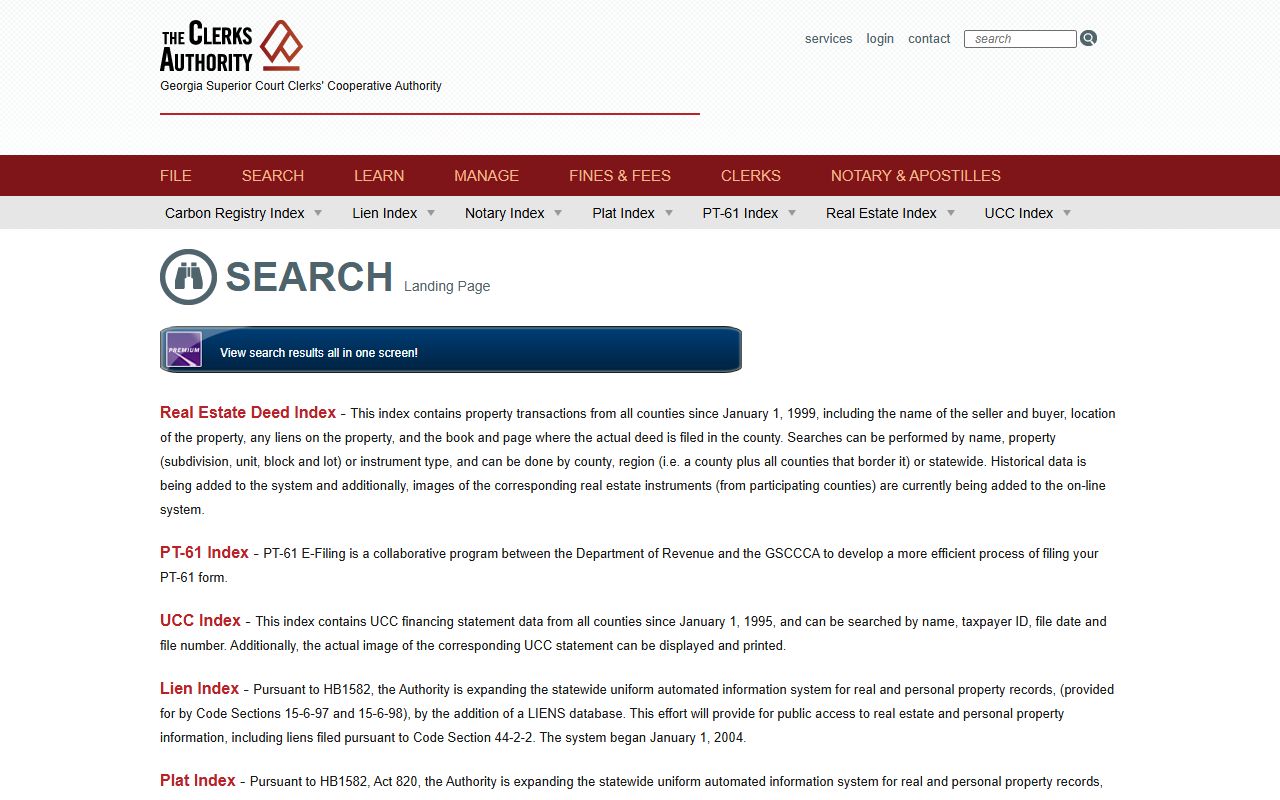
The GSCCCA website gives you access to multiple record indexes through one login, covering civil case filings, real estate data, UCC records, liens, and more across all 159 Georgia counties.
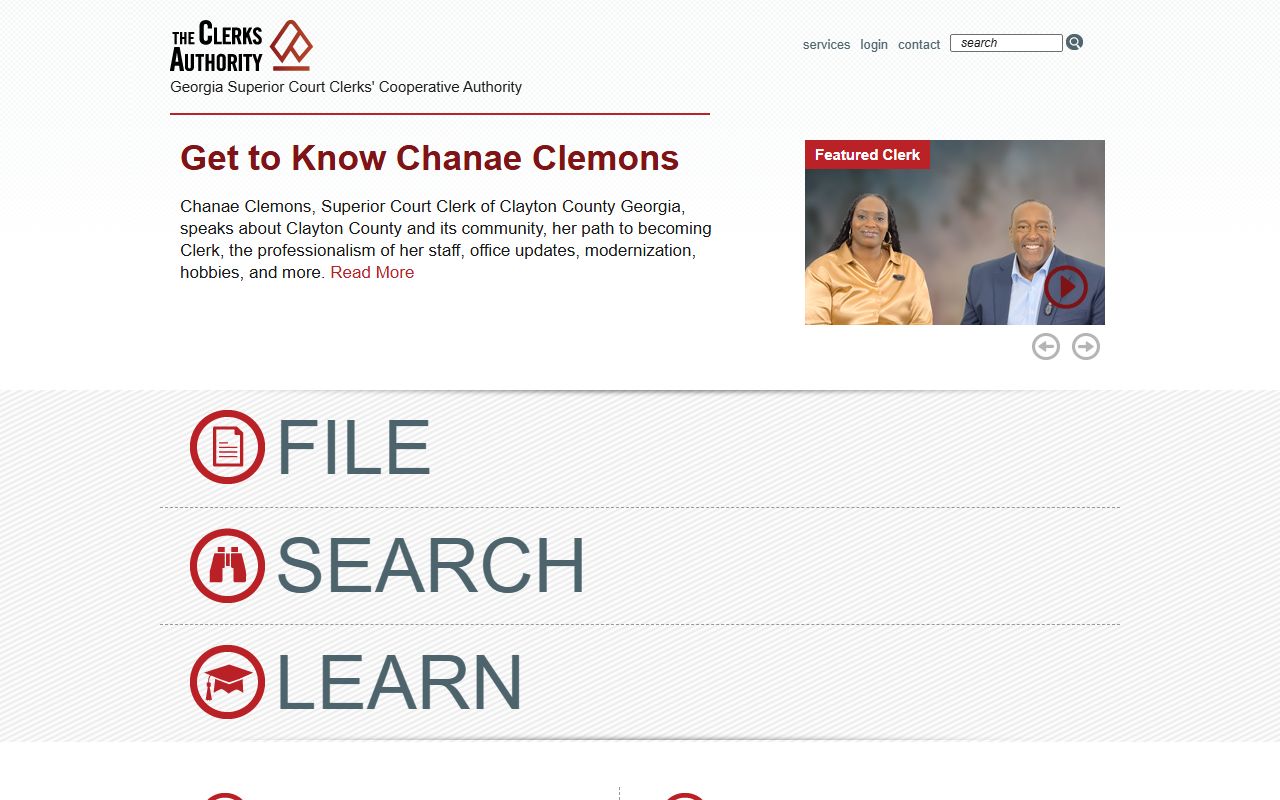
This is the central hub for statewide Georgia court and property record searches, handling millions of indexed documents each year.
As the Superior Court Clerks of Georgia website notes, "Clerk of Court is one of four elected county offices created by the Georgia Constitution." Each of Georgia's 159 counties has exactly one clerk, and they are the official record keepers for criminal and civil court filings as well as land records. Their Find My Clerk tool at gaclerks.org lets you locate the clerk office for any county in the state.
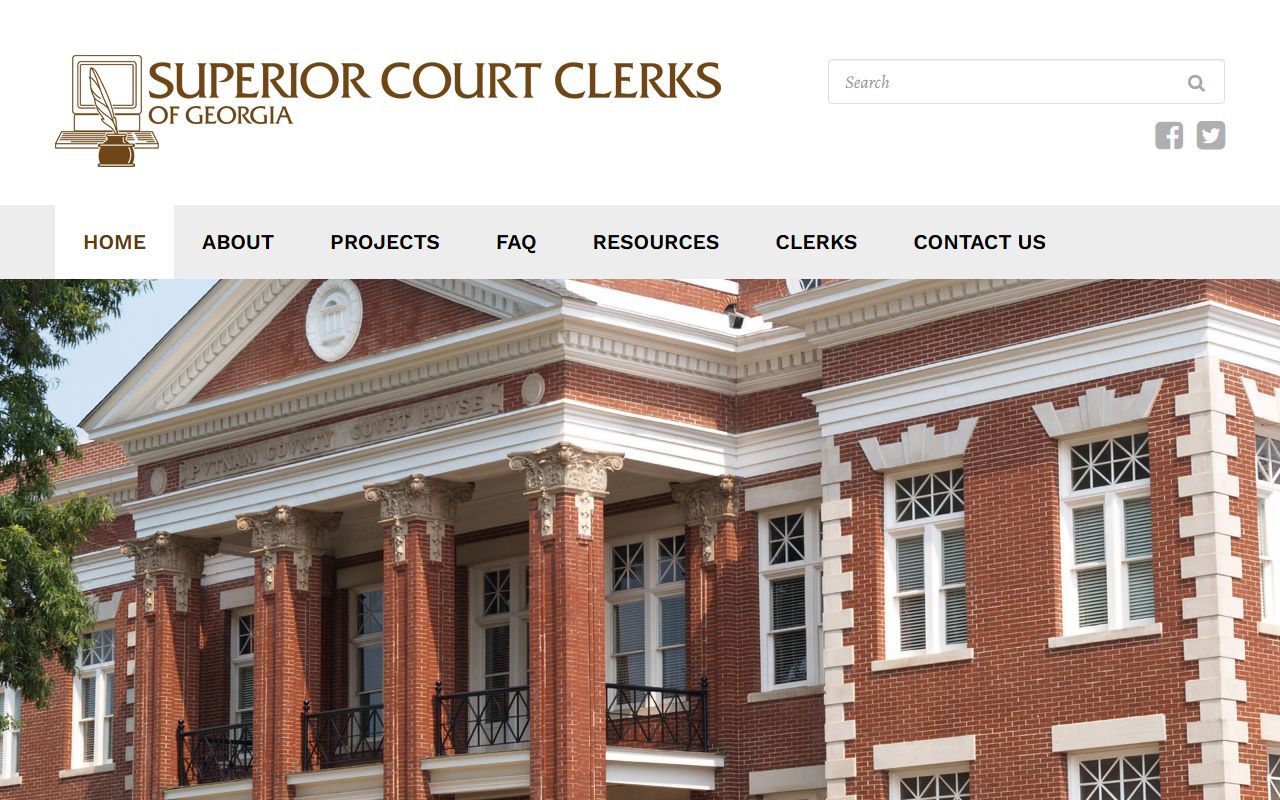
Every county clerk in Georgia manages the same core set of responsibilities, though online access and fee structures vary from county to county.
The Georgia Judicial Gateway offers a central hub for court system resources statewide, from individual court websites to rules, news, and services across all court levels in Georgia.
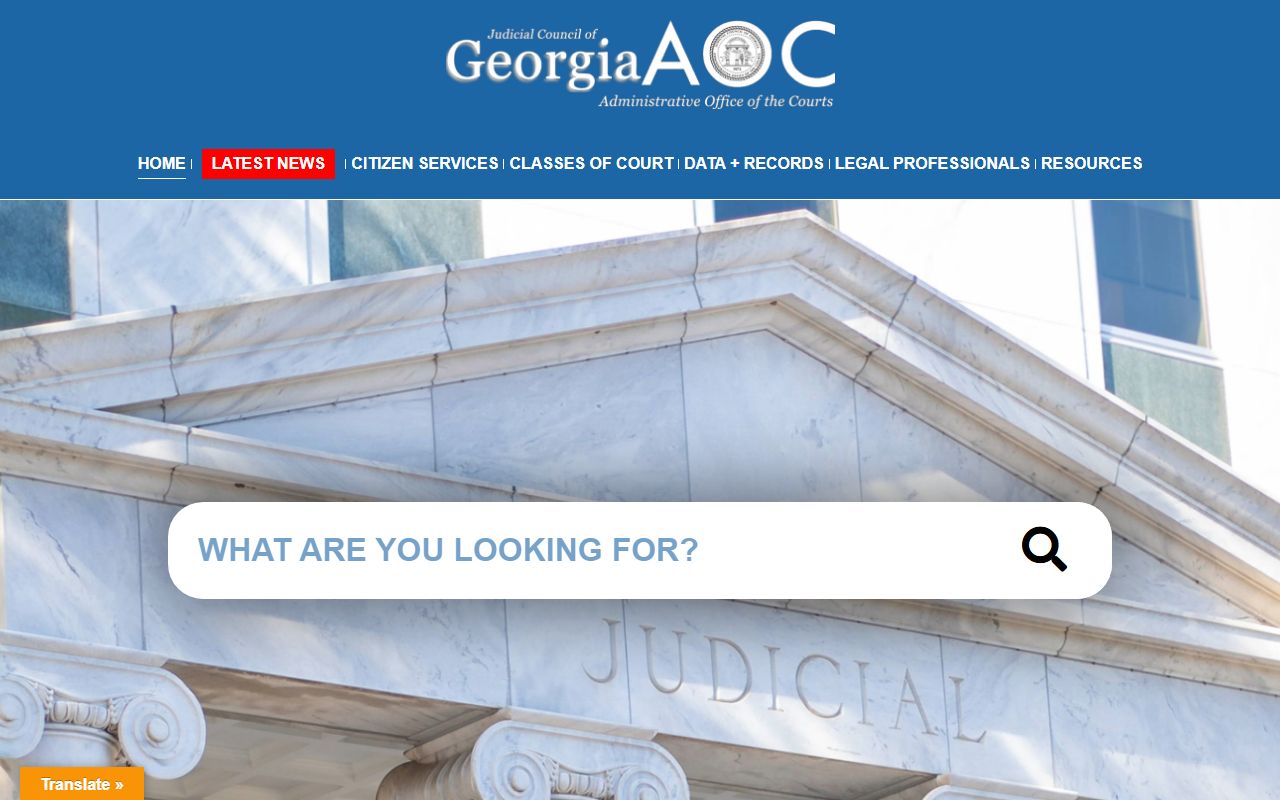
Start here when you need to navigate the broader Georgia court system and are not sure which court or agency handles the records you need.
How to Search Georgia Court Records Online
Georgia offers several ways to look up court records from home. The GSCCCA search portal gives you access to the statewide index of civil case filings, real estate records, UCC filings, lien data, and more. Basic access requires creating a free account. The premium tier offers more search tools and document access. As of July 2025, a regular account costs $14.95 per month and premium is $29.95 per month. Each printed page costs an additional $0.50 under either plan. UCC certified name searches are $15.00 per debtor name.
The GSCCCA Search Portal lets you search by record type, including civil case index, real estate instruments, UCC filings, liens, plats, and notary records. It covers all 159 Georgia counties in a single database.
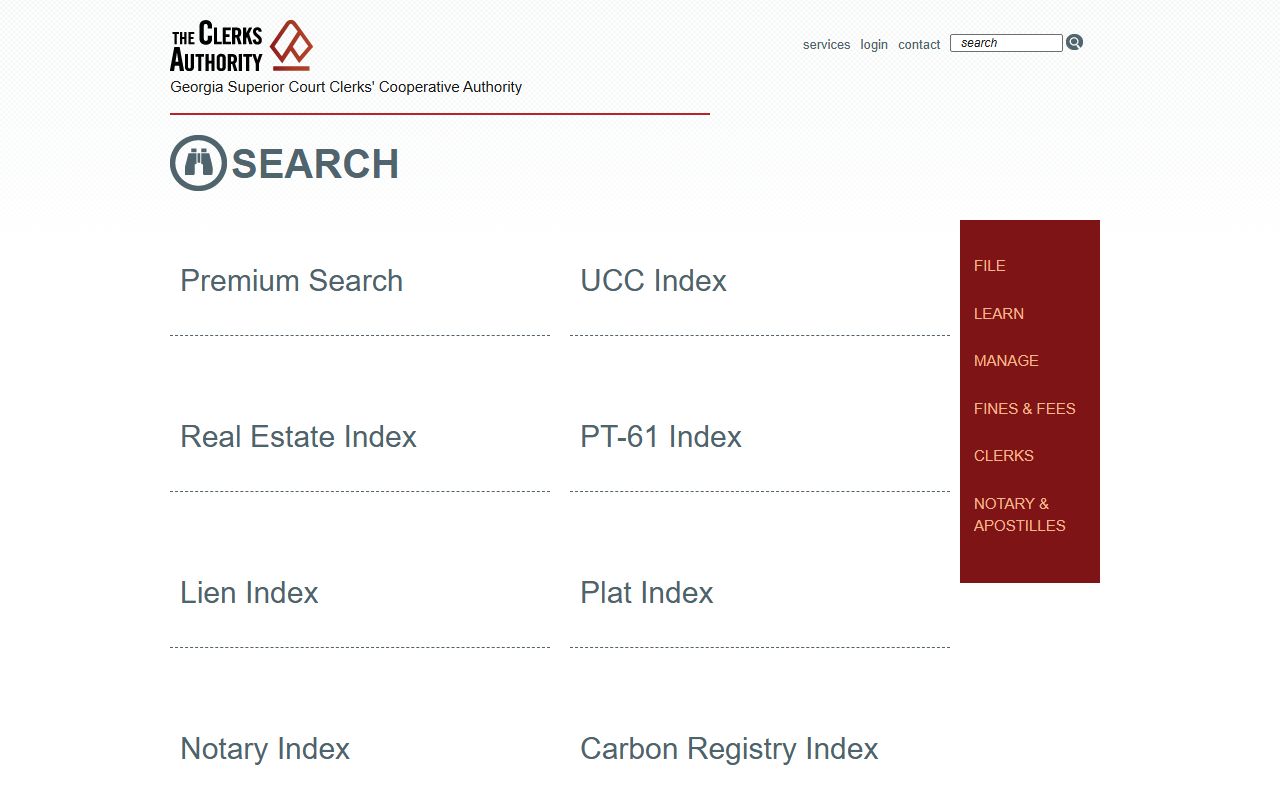
Start here for most statewide Georgia court record searches, especially those involving real estate and commercial filings that cross county lines.
For power users, the GSCCCA Premium Search adds PT-61 address searches, map-based searches, instrument type filters, and daily PT-61 reports. Premium users get priority access and faster results when searching high volumes of Georgia court records.
Legal professionals and title searchers who need frequent, detailed access to Georgia court and property records will get the most value from the premium plan.
re:SearchGA lets you search case information and court documents across 25 Georgia counties at once. You can research opposing counsel, track active cases, and set up case alerts for parties or case numbers you want to monitor. It works well for attorneys and others who need to follow litigation across multiple Georgia counties without running separate searches for each one.
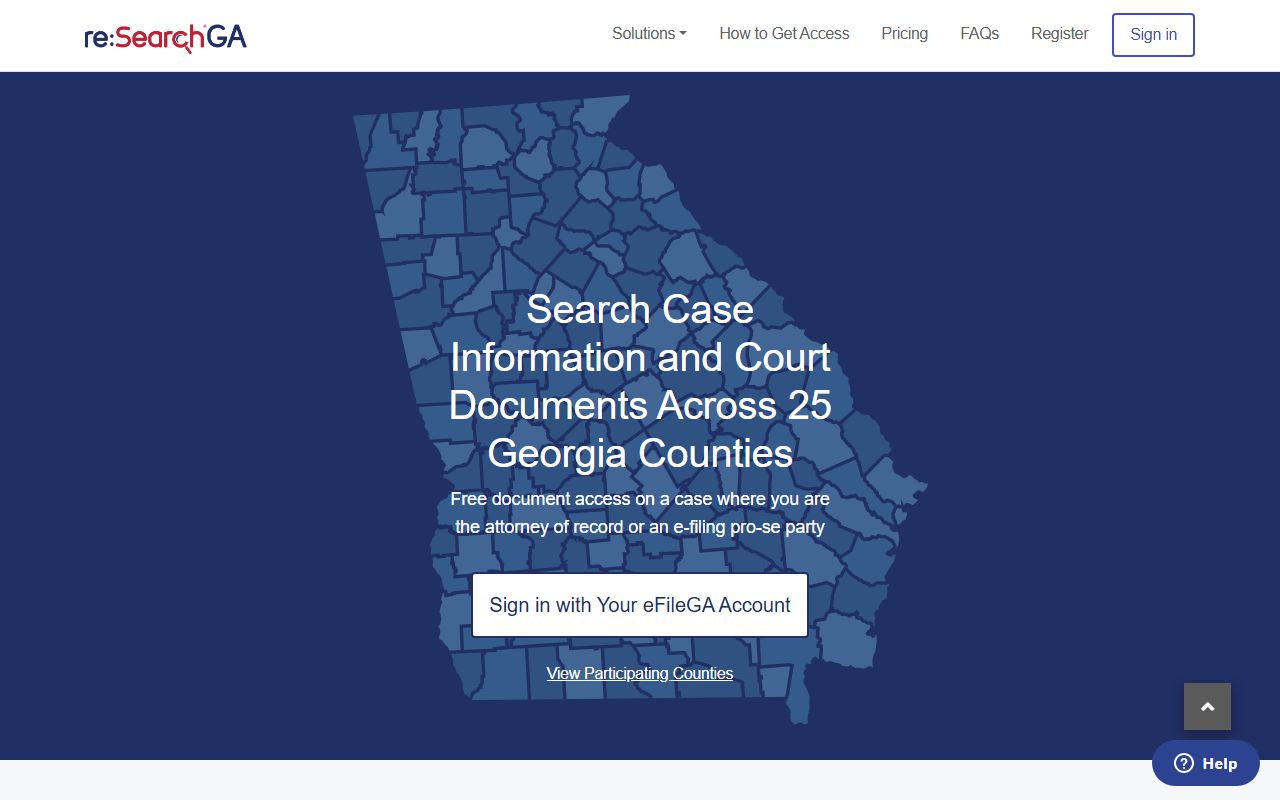
The 25-county coverage makes it useful when you are not sure which county a case was filed in, or when you need to track related cases filed across different jurisdictions in Georgia.
GSCCCA Account Tools and Notifications
Beyond basic search, GSCCCA offers account-based services for people who need regular access to Georgia court records. The eCertification portal lets you order certified copies of documents online without visiting a courthouse. Certified documents carry the official stamp of the clerk and are accepted for legal purposes in Georgia. This service is particularly useful for attorneys, title companies, and lenders who need verified court documents frequently.
The eCertification Portal allows users to order certified copies of Georgia superior court documents electronically, removing the need to travel to a county clerk office for every certified copy request.
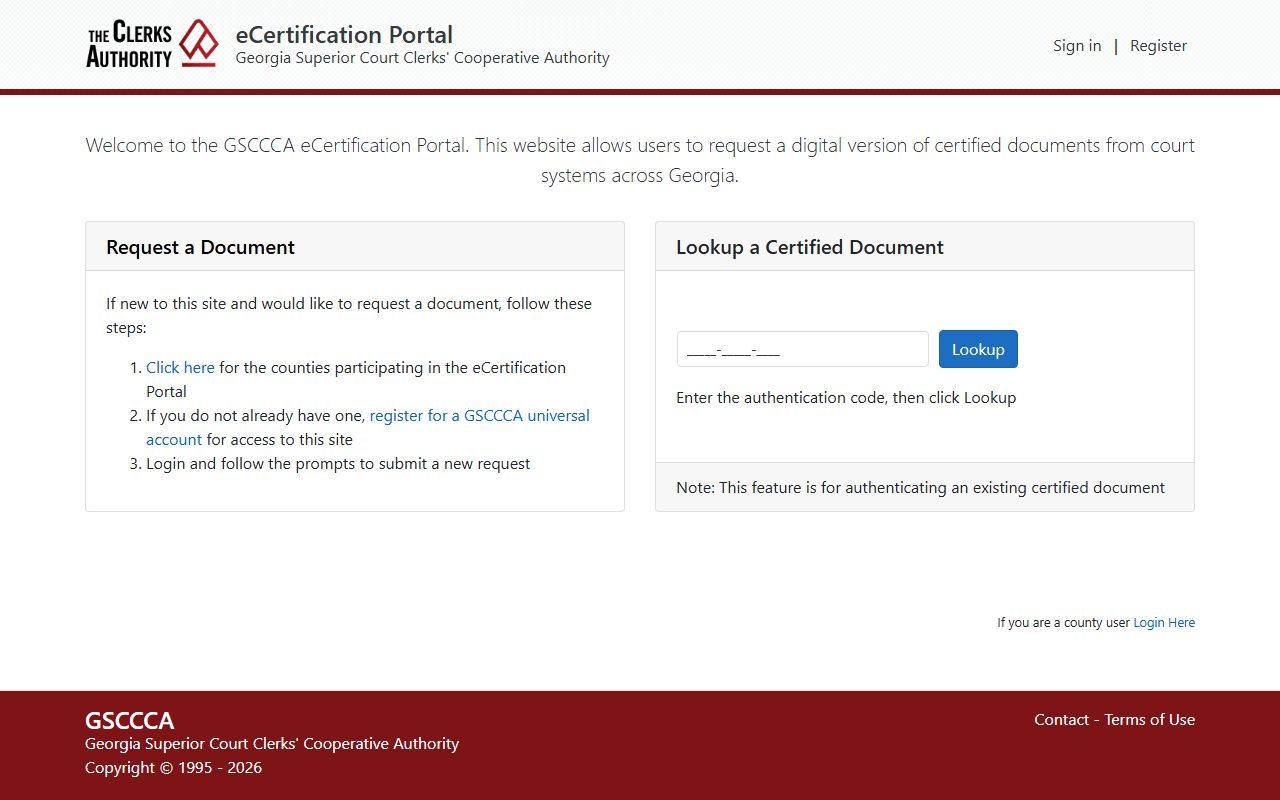
Certified document orders through this portal are processed and returned electronically, cutting out the need for in-person courthouse visits across Georgia's 159 counties.
The Filing Activity Notification System, called FANS, is a free GSCCCA service that sends real-time alerts when filings related to your name, property, or cases are made anywhere in the Georgia court system. Property owners use it to watch for liens placed on their land. Attorneys use it to keep tabs on ongoing cases. Anyone monitoring court records activity across Georgia can benefit from setting up FANS alerts at fans.gsccca.org.
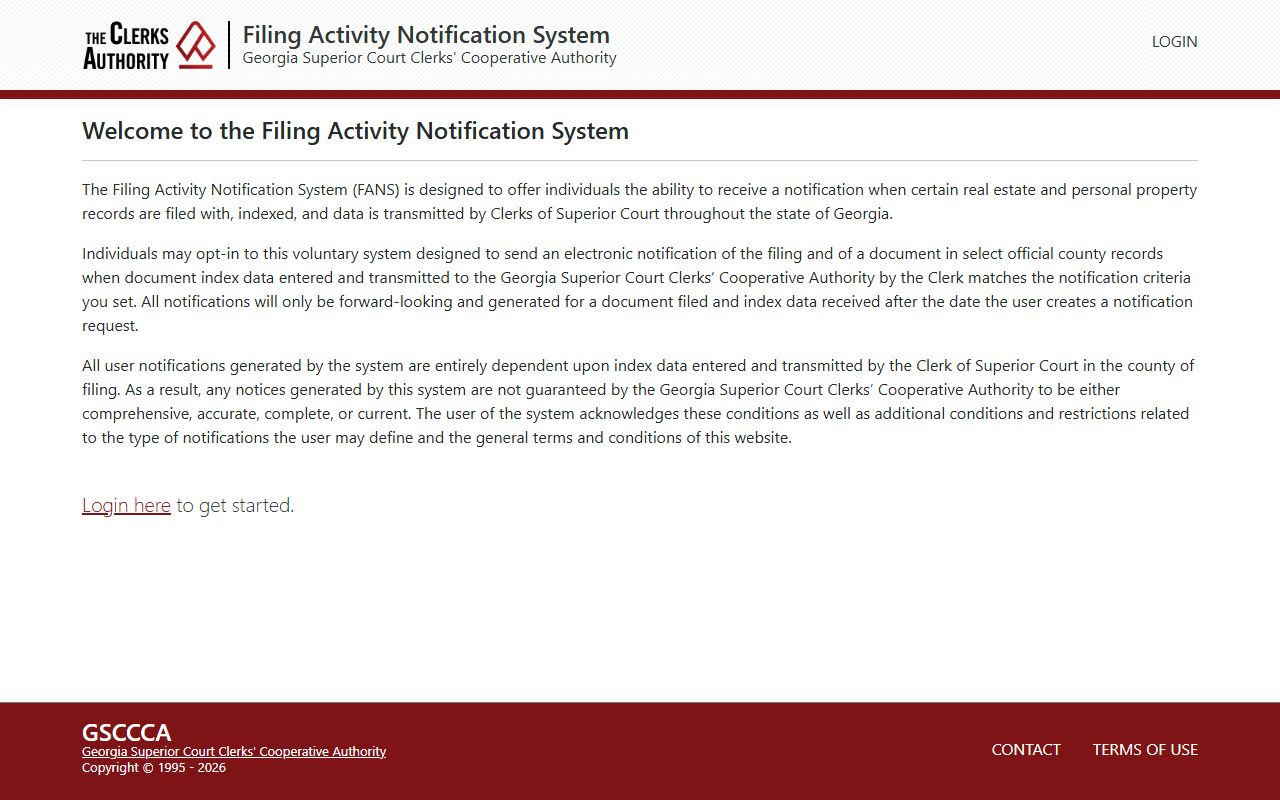
FANS is free to use and does not require a paid GSCCCA subscription, making it the easiest way to stay informed about new court filings in Georgia.
For questions about your account, billing, or record searches, the GSCCCA support team is available by phone at (404) 327-9058, toll-free technical support at 800-304-5174, or by email at Help@gsccca.org. The GSCCCA contact page also offers live chat during business hours for faster help with Georgia court records access issues.
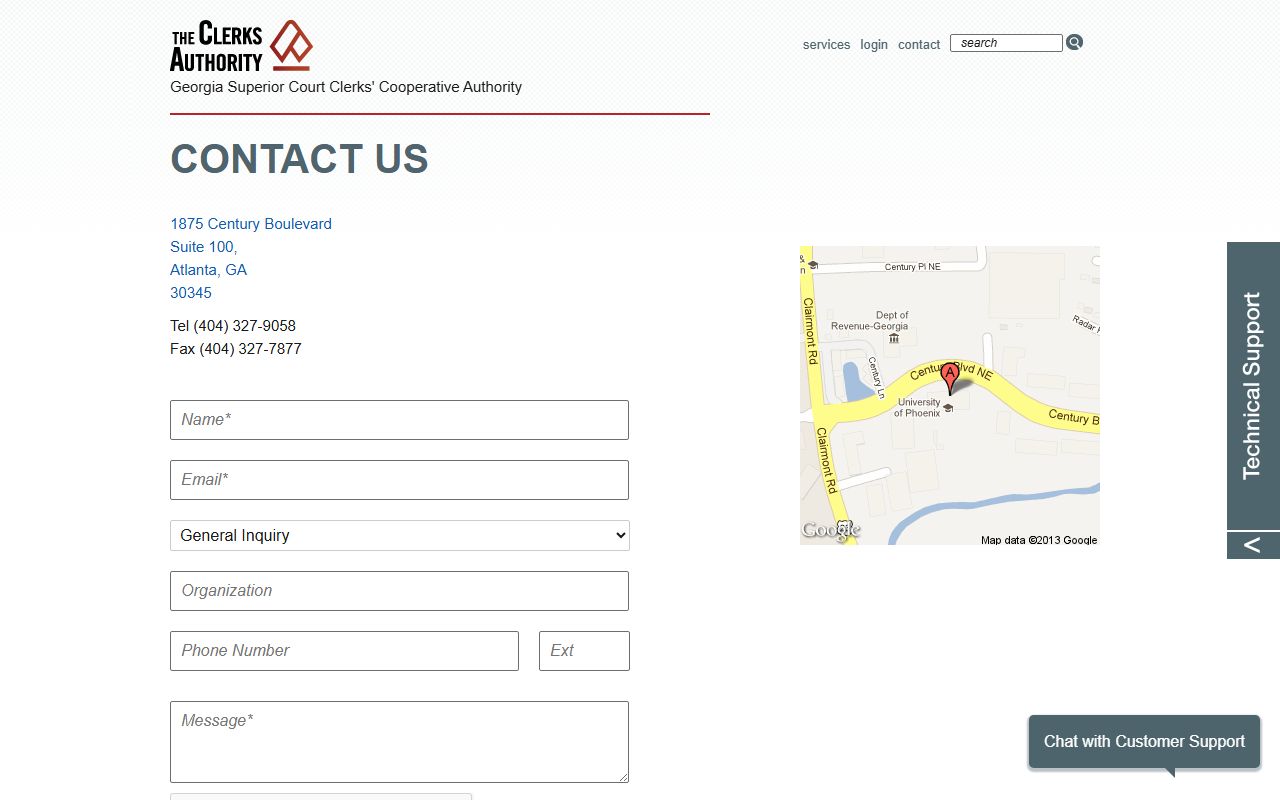
Support staff are available Monday through Friday, 7:30 a.m. to 6:00 p.m. Eastern, to help with any issues related to accessing or searching Georgia court records.
Georgia Appellate Court Records
The Supreme Court of Georgia and the Georgia Court of Appeals maintain public records of their proceedings. The Supreme Court is the highest court in the state, housed at the Nathan Deal Judicial Center at 330 Capitol Avenue SE in Atlanta. Their clerk's office is open Monday through Friday, 8:30 a.m. to 4:30 p.m., and you can reach them at (404) 656-3470. The clerk processes and keeps permanent records of appeals, State Bar disciplinary cases, and Fitness Board matters. Court staff cannot provide legal advice or attorney referrals. The Supreme Court docket search covers cases from the last five years.
The Supreme Court of Georgia website provides access to opinions, the docket search, e-filing details, and attorney admission information.
Supreme Court opinions set binding law for all lower courts in Georgia and are publicly available through the court's opinions archive on the same site.
The Supreme Court Docket Search is free to use and does not require an account. You can look up cases by party name, case number, or attorney. Cases older than five years may require a direct written request to the clerk's office at (404) 656-3470.
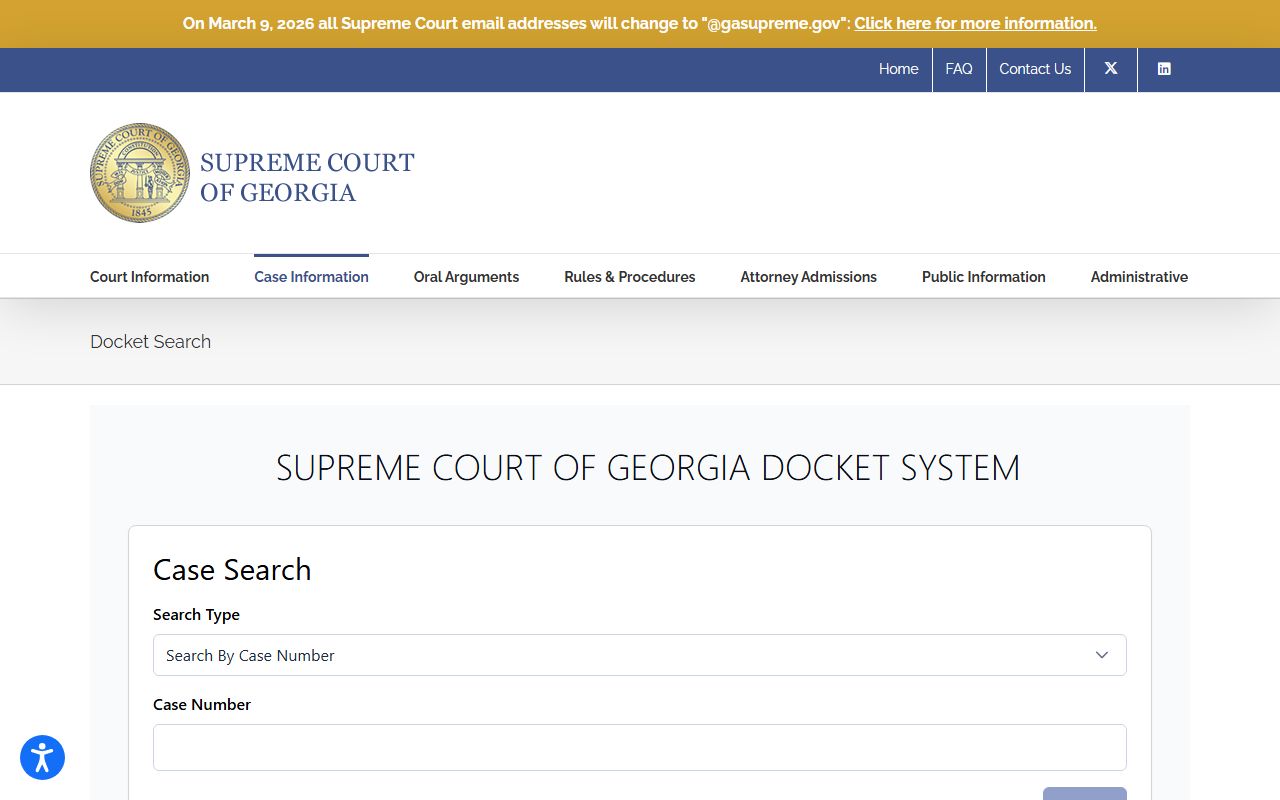
This is the fastest way to check whether a case reached the Georgia Supreme Court and see its current status or final ruling.
The Georgia Court of Appeals is the intermediate appellate court, handling the bulk of civil and criminal appeals that don't go directly to the Supreme Court. You can search the docket by case number, party name, or words from the case style. Requesting copies of full record volumes carries a fee: $50 for fewer than 501 pages, $100 for 501 to 2,000 pages, $150 for 2,001 to 4,000 pages, and $250 for over 4,000 pages. These Georgia court records fees apply to record volume requests, not individual document copies.
The Court of Appeals website also publishes current opinions and a searchable opinion archive going back many years for Georgia court cases.
Electronic filing at the Court of Appeals goes through EFAST, the court's dedicated e-filing platform. Attorneys and parties with active appeals can file documents and receive case notices through this system without visiting the court in person.
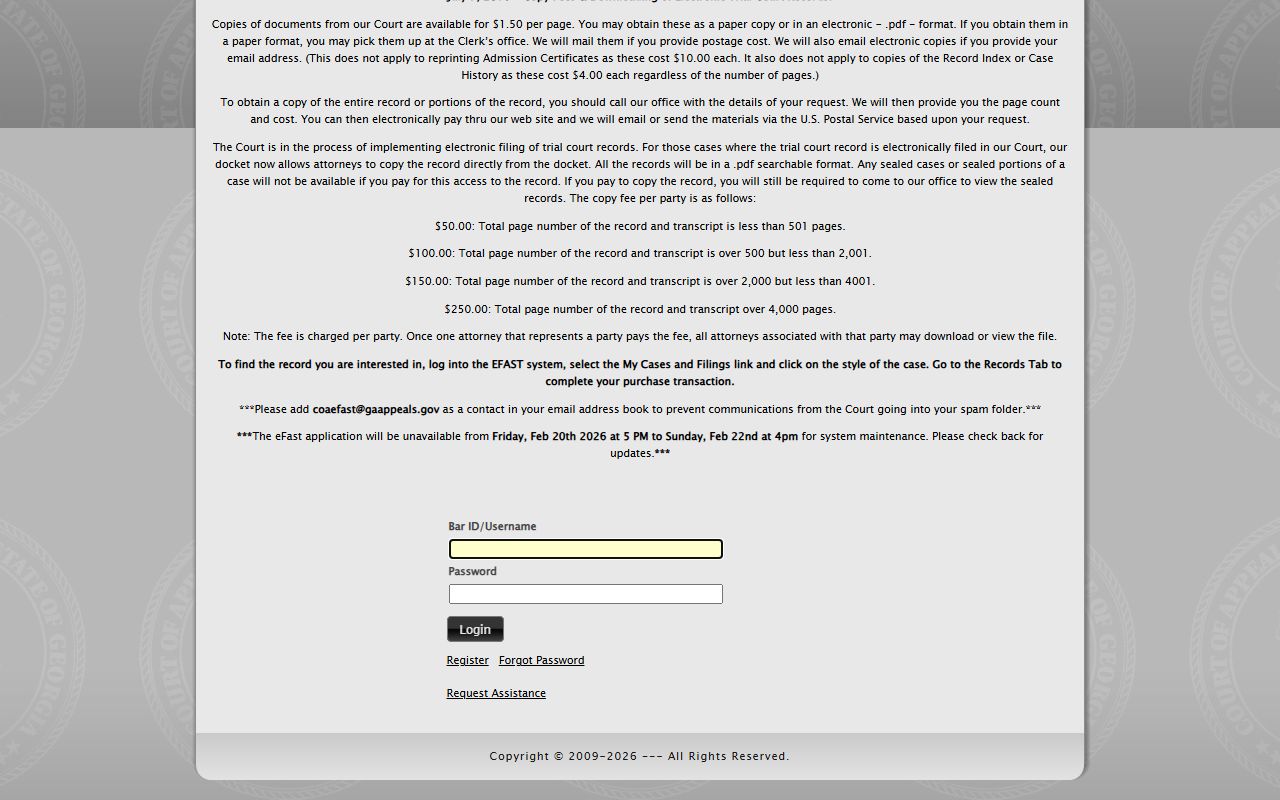
EFAST handles all electronic document submissions for pending appeals at the Georgia Court of Appeals.
E-Filing Georgia Court Documents
Georgia has moved much of its court filing process online. Several platforms serve different courts across the state. PeachCourt is the most widely used system for civil and criminal e-filing in Georgia's state and superior courts. The platform hosts file-stamped documents from participating courts, with case dockets going back to 2005 in most jurisdictions. Document copies cost $0.50 per page plus a small convenience fee. You can call PeachCourt at 844-GA-EFILE or visit the site to open an account. Documents not available through PeachCourt include sealed materials, adoption case records, and unsigned proposed orders.
PeachCourt covers civil and criminal e-filing for courts all across Georgia and provides case search and document access in one platform for court records going back to 2005.
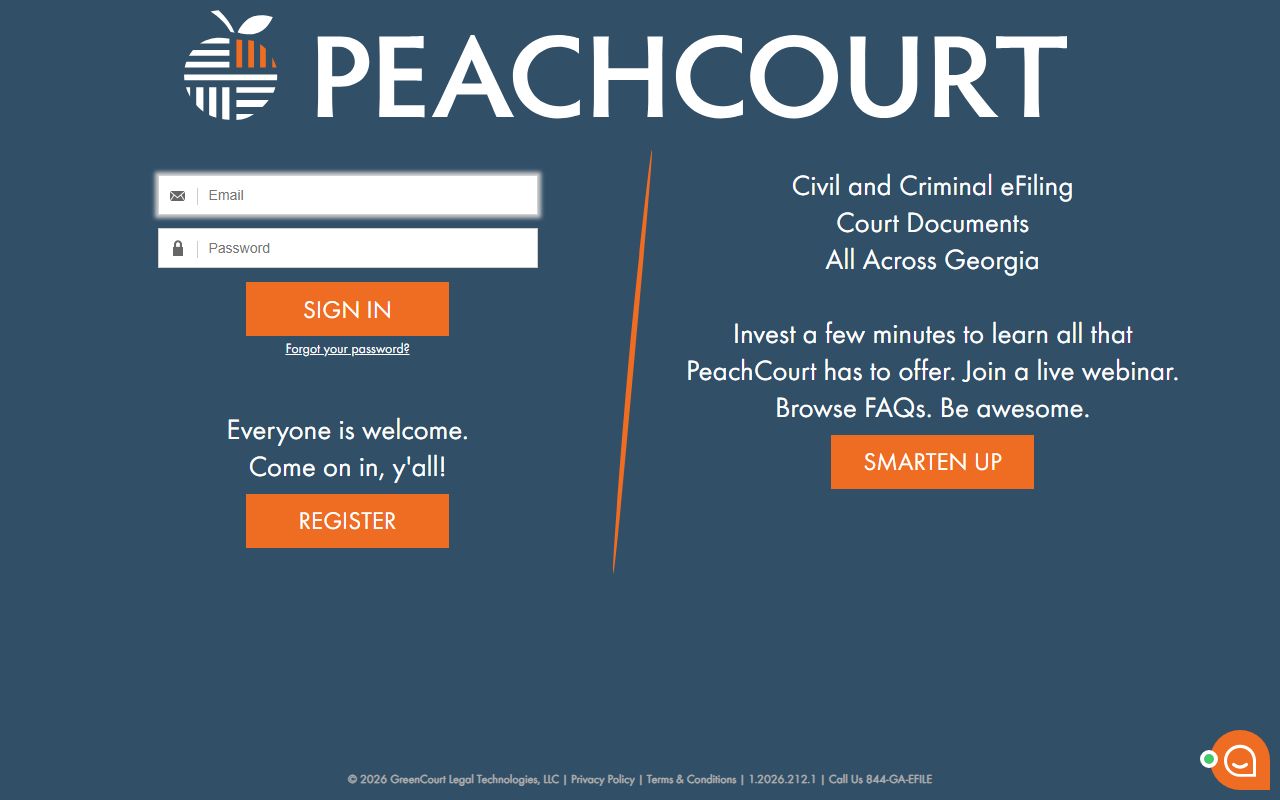
Most Georgia counties that participate in e-filing use PeachCourt as their primary platform for new case filings and document submissions to superior and state courts.
Odyssey eFileGA is another e-filing platform used across multiple Georgia courts. It operates around the clock, 24 hours a day, seven days a week, allowing attorneys and parties to open new cases and file into existing ones from anywhere. The system works similarly to the federal CM/ECF system. Courts using the Tyler Technologies case management system typically rely on Odyssey for electronic filing. Between PeachCourt and Odyssey eFileGA, most participating Georgia courts offer some form of electronic access to court records and document submission.
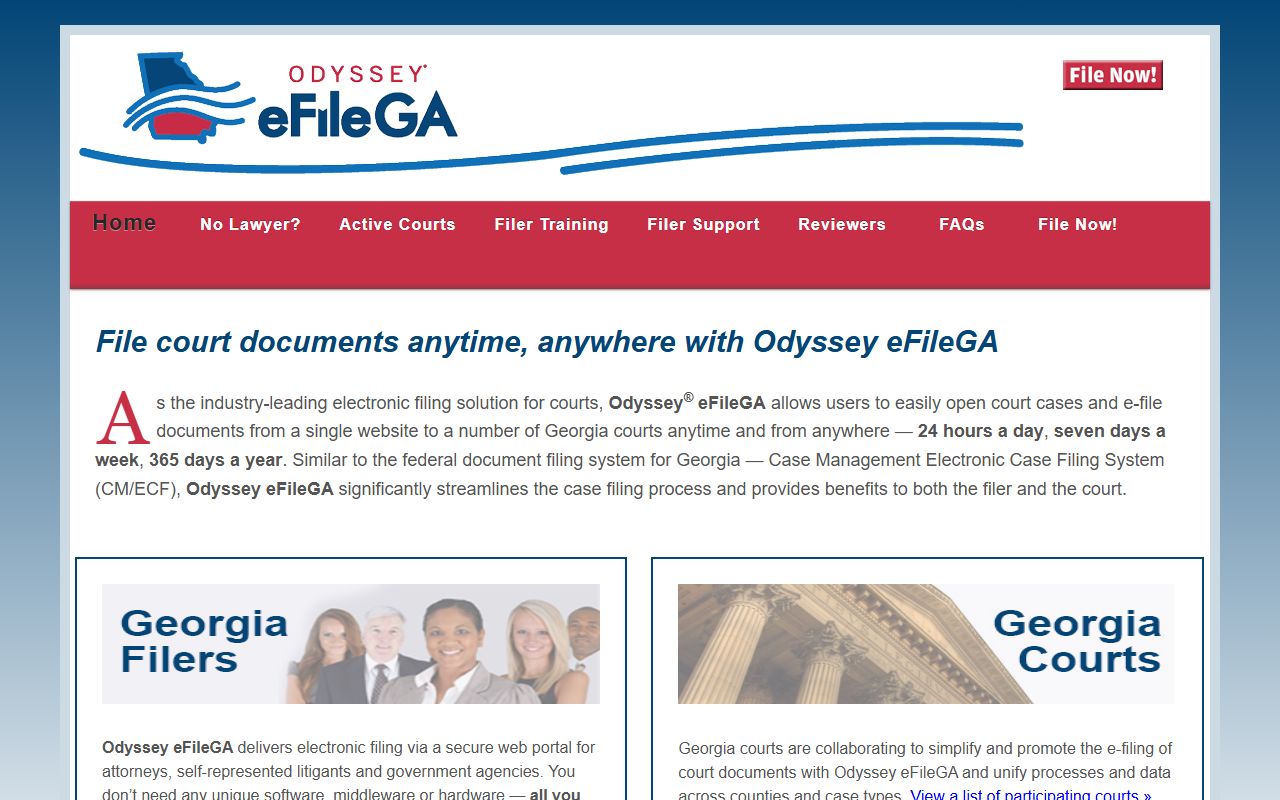
Check with the specific county court to confirm which e-filing platform it uses before attempting to file Georgia court documents electronically.
Municipal Court Records in Georgia
Georgia has hundreds of incorporated cities, most of which operate a municipal court. These courts handle local ordinance violations, traffic cases, minor criminal matters, and preliminary hearings. Municipal courts do not handle serious felonies, major civil lawsuits, or divorce cases. Those matters go to the county Superior Court or State Court. Records from a city's municipal court stay with that city, while records for more serious cases are held by the county clerk office serving that area.
The Council of Municipal Court Judges provides oversight and resources for Georgia's city courts. Their page lists participating municipalities and general court information for the municipal court system across Georgia.
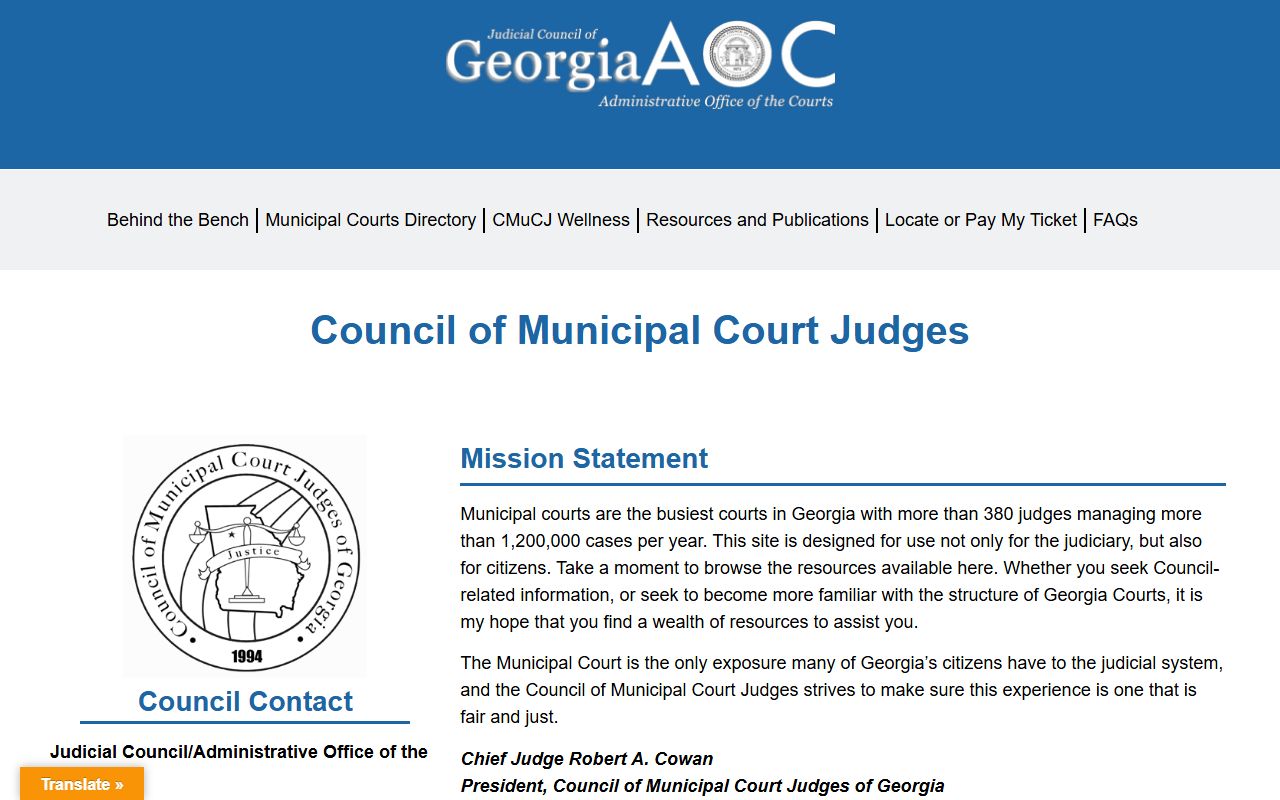
Each city's municipal court has its own clerk and contact details, which you can find through the city's official website or the council directory at georgiacourts.gov.
Need to pay a fine or find a municipal court case? The Locate or Pay My Ticket portal on the Georgia Judicial Gateway helps you find the right municipal court and pay traffic or ordinance fines online without visiting the courthouse in person.
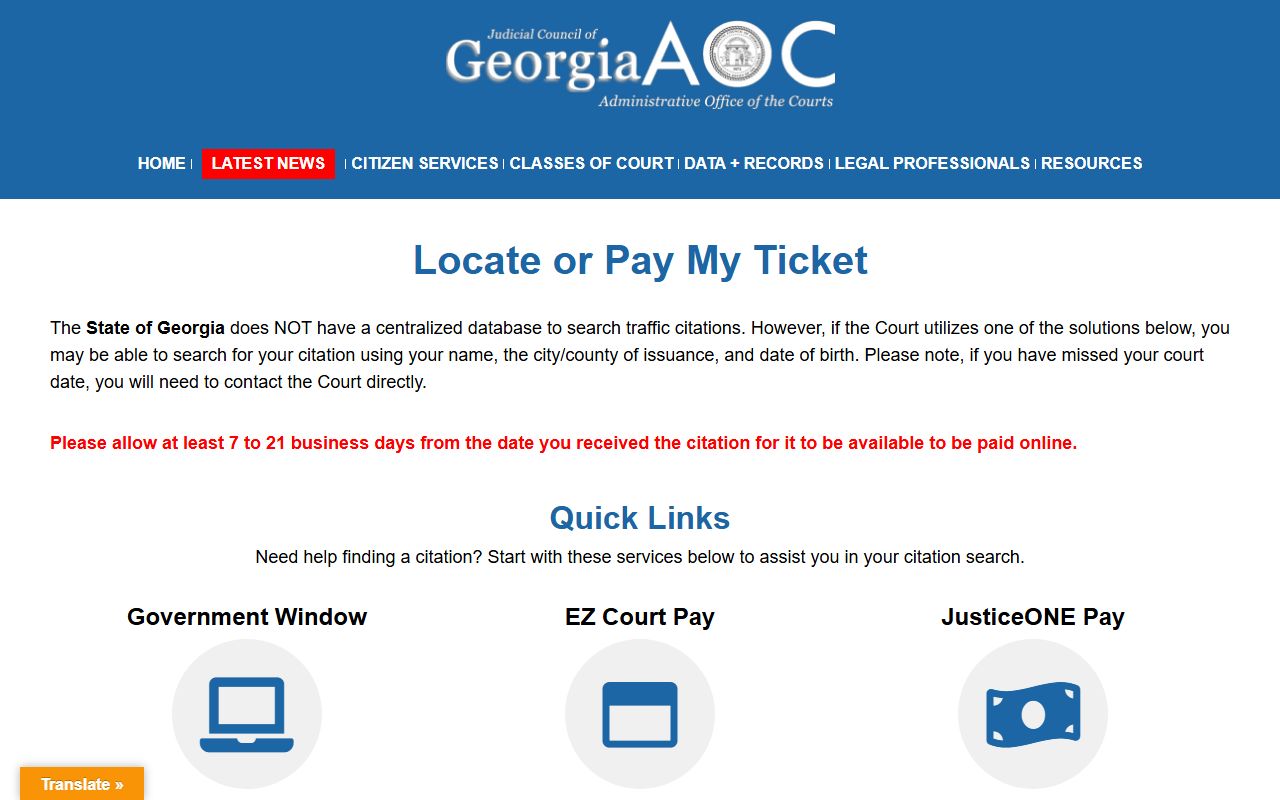
This portal covers most Georgia municipal courts that participate in the state's online ticket payment system, so you can resolve many fines from home.
Georgia Open Records Law
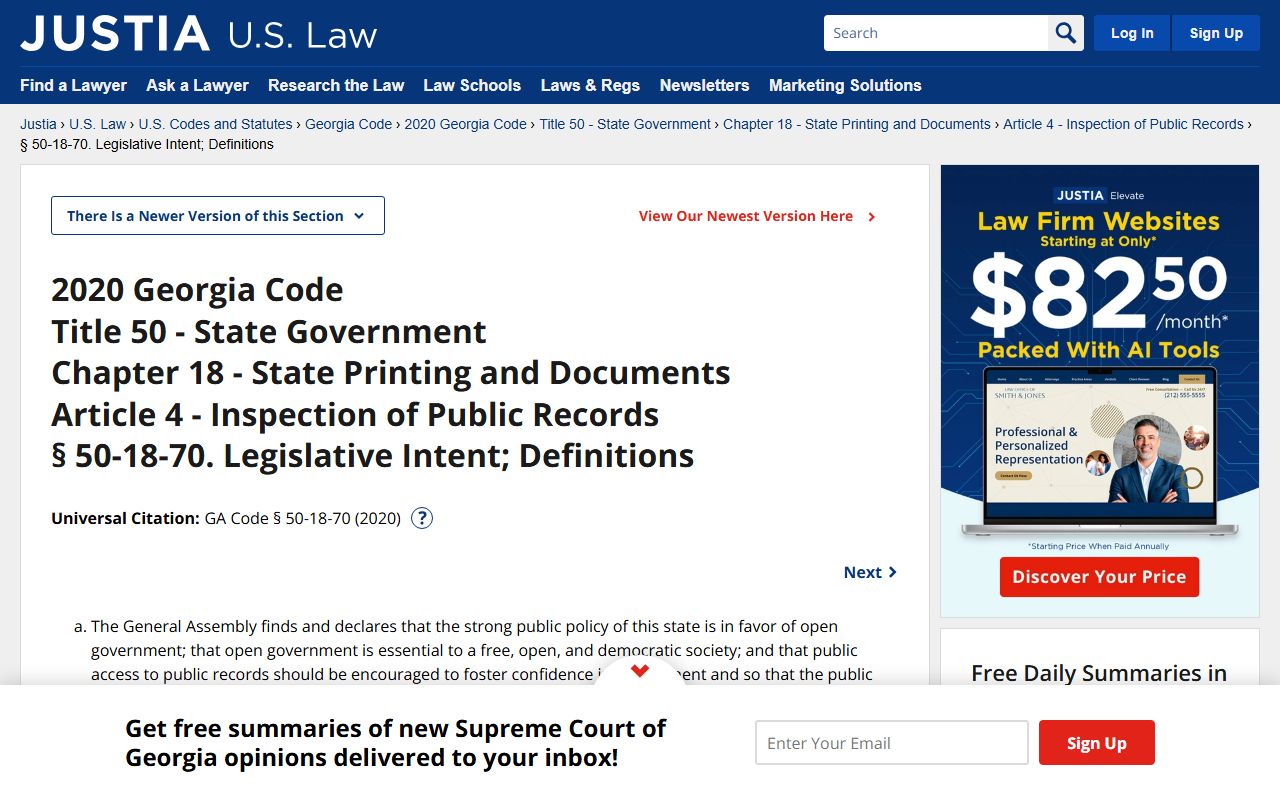
Georgia's Open Records Act governs public access to court documents and government records. Under O.C.G.A. § 50-18-70, all public records are open for personal inspection and copying unless specifically exempted by court order or law. Court records fall under this rule. Any person can request to see or copy Georgia court records. You do not need to be a party to the case, and you do not need to give a reason for your request. Standard copying fees are $0.10 per page. Agencies must respond to records requests within three business days.
The Georgia Supreme Court expanded Open Records Act coverage in 2024 through its ruling in Milliron v. Antonakakis. That case held that private contractors performing services for public agencies may also be subject to records requests. Records created by a private entity "in performance of a service or function for or on behalf of an agency" are public records. This means third-party vendors working with Georgia courts may need to respond to Open Records Act requests, not just the courts themselves.
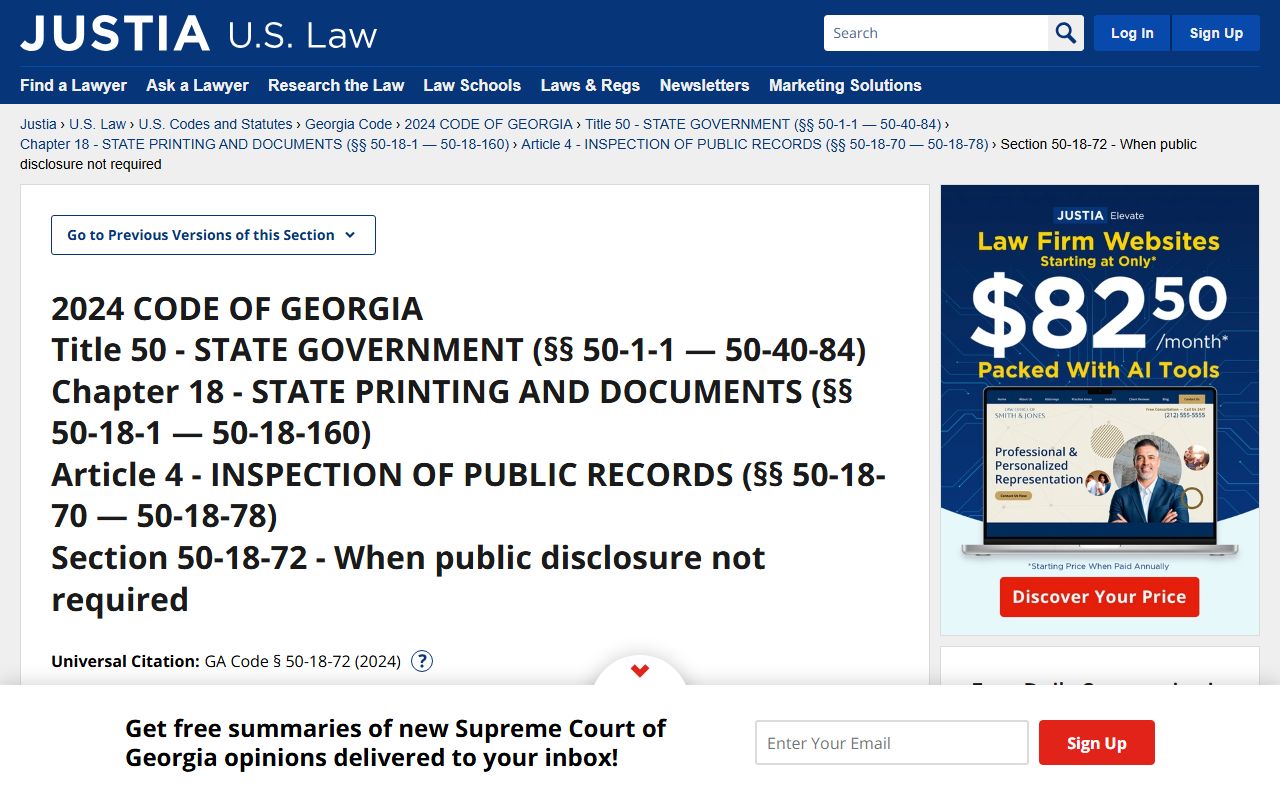
O.C.G.A. § 50-18-72 lists 52 categories of records exempt from disclosure. Court-related exemptions include confidential jury list data under subsection (a)(6), records revealing social security numbers or medical information under subsection (a)(20), and records held by GSCCCA on behalf of a clerk of superior court under subsection (a)(50). When a social security number or similar sensitive data appears in a court record, the agency must redact that specific data rather than withhold the entire document.
Courts can seal records in limited cases. Uniform Superior Court Rule 21 requires a motion, a public hearing, and a finding that harm to privacy clearly outweighs public interest before any Georgia court record can be sealed. Sealed records are rare. Most Georgia court records remain fully accessible to anyone who requests them through the county clerk's office.
The Georgia Open Records Act was last amended in 2012 to remove the citizenship requirement, so non-citizens may also request Georgia court records.
Note: Certain court records are always restricted regardless of the Open Records Act, including juvenile court files, adoption records, mental health commitment records, and grand jury deliberation materials.
What Georgia Court Records Contain
The contents of a Georgia court record depend on the type of case. In a civil matter, you will typically find the initial complaint, the defendant's answer, motions, court orders, and the final judgment. In a criminal case, the record includes charging documents, arraignment papers, plea filings, pre-trial motions, and the final disposition. Real estate records at the clerk office show deeds, plat maps, liens, and mortgage instruments. UCC filings document secured transactions. Each record type has its own index within the GSCCCA system. Understanding which type of record you need will tell you which office to contact and which online portal to use for Georgia court records.
Common types of Georgia court records include:
- Civil complaints, answers, and motions
- Criminal charging documents and dispositions
- Court orders and final judgments
- Real estate deeds, plat maps, and lien records
- UCC financing statements and amendments
- Notary public commissions
- Probate filings, wills, and estate records
Some parts of court files in Georgia are restricted. Juvenile records are generally sealed. Adoption records are confidential by law. Mental health commitment records follow separate access rules. Trade secrets in commercial litigation may be protected by court order under Rule 21. Outside of these limits, most Georgia court records are open to anyone who asks the Superior Court Clerk in the county where the case was filed.
Browse Georgia Court Records by County
Each of Georgia's 159 counties has its own Superior Court Clerk who maintains the official court record database for that area. Pick a county below to find local office contacts, court portals, and record request details.
Court Records in Major Georgia Cities
Residents of major Georgia cities file court cases at their county Superior Court. Pick a city below to find the right courthouse and court record resources for that area.